
An airline pilot answers some of the biggest questions kids have about flying, from what happens inside the cockpit to turbulence, takeoff and what it takes to become a pilot.
By Micah Hartsock, Airline First Officer
Have you ever wondered what happens inside the cockpit when you fly on an airplane?
What are the pilots doing? Why does the airplane shake sometimes? And how does something that weighs thousands of pounds even stay in the sky?
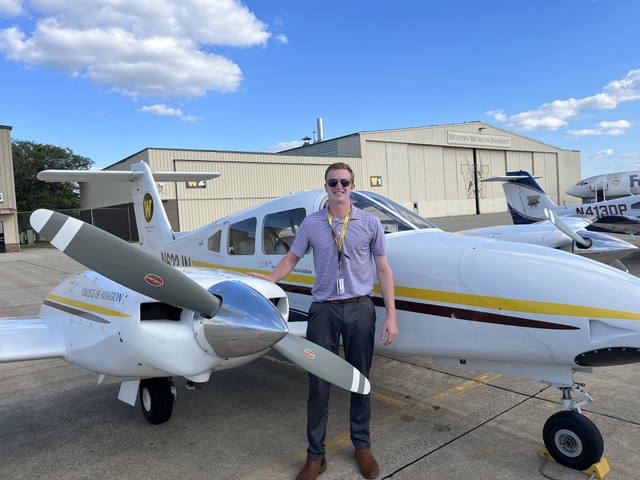
As an airline pilot, I get to answer those questions every time I go to work. My name is Micah Hartsock. I’m 23 years old, originally from Carmel, Indiana, and I’m now based in Chicago as a First Officer flying the Embraer 175. My journey to becoming a pilot started when I was a kid, thanks to my grandpa.

How I Became a Pilot
My grandpa was my first real connection to aviation. He served in the U.S. Air Force during the Vietnam era and, after returning home, earned his pilot’s license and began flying recreationally. When I was younger, he took me flying a few times, and those experiences made a lasting impression on me.
I loved the feeling of being in an airplane and seeing the world from above. I also knew that a desk job wasn’t for me. I wanted a career where every day could be different, where I could travel, learn new things and be challenged.
I started flight training during COVID-19 when I was a junior in high school. I earned my private pilot certificate when I was 18, and by then I knew I wanted to make flying my career.
I attended Western Michigan University and earned a bachelor’s degree in Aviation Flight Science. During my four years there, I earned all of my pilot licenses and ratings.
While earning my degree, I became a Certified Flight Instructor and taught students how to fly for a little over a year. Teaching helped me build the flight experience required to become an airline pilot while also teaching me how important communication, preparation and teamwork are.
In July 2025, I was hired as a First Officer for a regional airline flying the Embraer 175. I was initially based at LaGuardia Airport in New York City, and I am now based at Chicago O’Hare International Airport.

What Happens Before Takeoff?
A lot happens before an airplane ever leaves the ground.
Before each flight, pilots review the weather, route, airport information, fuel and the airplane’s systems. We also inspect the airplane and make sure everything is ready for the flight.
Once we’re in the cockpit, we program our route into the airplane’s computers, review our plans, complete checklists and communicate with air traffic control.
Pilots don’t just get in and take off. Preparation is one of the most important parts of being a pilot.
During takeoff, the airplane accelerates down the runway until it reaches the speed needed to fly. The pilots then raise the nose of the airplane, and we begin climbing into the sky.
You may hear some loud noises after takeoff as the landing gear and flaps move. These sounds are completely normal and are simply parts of the airplane changing configuration.
What Is Turbulence?
One of the most common questions I get is about turbulence.
Turbulence is basically movement in the air. Think of it like driving over a bumpy road, except the bumps are in the air instead of on the ground.
Turbulence can be caused by weather, mountains, jet streams or changes in the atmosphere. Pilots can often see or receive information about areas of turbulence and may change altitude or direction to avoid it.
Sometimes, however, we fly through it. The airplane might shake, bump or move up and down. Although it can feel uncomfortable or scary, airplanes are designed to handle turbulence.
The most important thing passengers can do is keep their seat belt fastened whenever they’re seated. If the airplane suddenly moves, the seat belt keeps you safely in your seat.
So the next time you experience turbulence, remember: a bumpy flight doesn’t necessarily mean something is wrong.
What Are Pilots Doing During the Flight?
Pilots do much more than simply hold the controls.
Throughout the flight, we monitor the airplane’s systems, communicate with air traffic control, watch the weather, monitor fuel and make decisions about the flight. We also work closely as a team with the other pilot and the flight attendants.
Modern airplanes have amazing computers and automated systems that help us fly safely and efficiently, but pilots are always monitoring the airplane and are prepared to take control and make decisions when needed.

A Few Airplane Facts
Here are a few things you might not know about airplanes:
- Airplane wings are designed to flex. If you see the wings moving during a flight, that’s normal. They’re designed to bend and flex.
- All airliners are certified to fly on one engine in case one were to fail. Pilots are trained yearly, going through worst-case scenarios in full-motion simulators to stay prepared and keep our passengers and crew safe.
- Every flight is different. Even if we fly the same route every day, weather, winds, traffic and other conditions can make each flight unique.
- The view from the cockpit is incredible. Flying at around 35,000 feet gives you a perspective of the world that very few jobs can provide.
Want to Become a Pilot?
If you’re interested in becoming a pilot, my biggest recommendation is to visit your local airport and ask about a discovery flight. You can fly with a Certified Flight Instructor for about an hour, learn about the airplane and even get to fly it yourself with the instructor’s help. It’s a great way to find out if this is something you would like to pursue.
Becoming an airline pilot is a long process. It takes commitment, studying, practice and hard work. But if you love aviation, it can be incredibly rewarding.
For me, there is nothing quite like being 35,000 feet in the air, flying across the country, looking out at the world below and knowing that this is my job.
Sometimes I think back to those first flights I took with my grandpa. He was the person who first introduced me to aviation, and I never imagined that those experiences would eventually lead me to a career as an airline pilot.
Flying has taken me places I never expected, and I can’t wait to see where it takes me next. Maybe someday, one of the kids reading this will be sitting in the cockpit, flying an airplane of their own.
About the Author
Micah Hartsock is a 23-year-old airline First Officer based in Chicago, Illinois. Originally from Carmel, Indiana, Micah discovered his passion for aviation through his grandfather, a former U.S. Air Force servicemember and recreational pilot. He began flight training during his junior year of high school, earned a bachelor’s degree in Aviation Flight Science from Western Michigan University, and became a Certified Flight Instructor before joining a regional airline in 2025, where he flies the Embraer 175.



Leave a Reply